Quick Answer
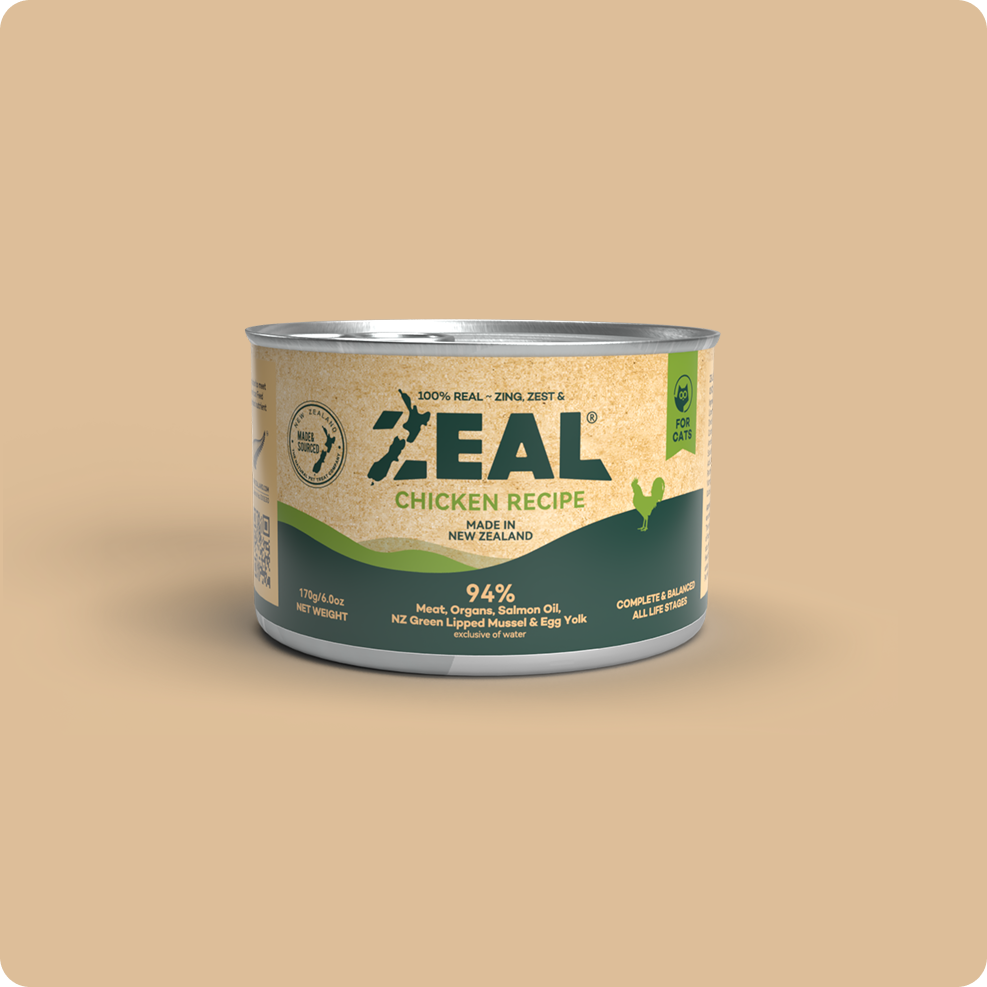
For an older Oriental Longhair, choosing food is less about finding a formula labeled specifically for seniors and more about looking at complete nutrition, calorie intake, portion size, moisture, and your cat's individual body condition. ZEAL cat foods are made to meet AAFCO All Life Stages nutritional standards rather than being formulated exclusively for senior cats. ZEAL wet cat food provides moisture along with 94% real meat and organs, green-lipped mussels, egg yolk and salmon oil, while ZEAL air-dried cat food provides 96% real meat & organs and is gently air-dried in Canada. For a cat whose goal is weight management, the daily amount matters just as much as the food itself.
Choosing Food for an Older Oriental Longhair Starts With the Whole Feeding Routine
An older Oriental Longhair can make food decisions feel surprisingly complicated. You may be looking for a suitable senior cat food, comparing labels that mention senior nutrition, or searching for the food for older cats while also trying to keep your cat's weight within a healthy range.
But a senior label alone does not tell you whether a food fits your cat's everyday needs.
For older cats, feeding decisions are most usefully viewed as a combination of life stage, body condition, daily activity, portion size, food format, and nutritional adequacy. There is also no single standardized nutrient profile that defines a senior cat food, so individual cats can have quite different nutritional needs as they age.
That makes the feeding routine just as important as the words printed on the front of the bag or can.
Does an Older Cat Actually Need a "Senior" Food?
Not necessarily.
AAFCO recognizes all life stages as a nutritional life-stage category, and ZEAL cat foods follow an AAFCO All Life Stages nutritional standard. That means ZEAL recipes are built around complete nutrition rather than senior-only claims, so they can fit into a broader daily feeding routine.
Instead, an older cat's diet can be evaluated by looking at whether the food provides complete and balanced nutrition, how much energy the cat receives each day, and whether the feeding amount matches the cat's current body condition.
This distinction matters when researching terms such as top rated senior cat food. A product does not need a "senior-only" label to be part of an appropriate feeding routine for an older cat.
Weight Management Is More About the Bowl Than the Label
When an older cat needs to manage body weight, portion control deserves attention.
AAFCO notes that feeding directions are guidelines and may need adjustment depending on an individual pet's condition and activity. Veterinary nutrition guidance similarly emphasizes portion feeding and monitoring body condition rather than relying indefinitely on a package feeding chart.
For a senior Oriental Longhair, a practical routine may include:
- Measuring the total amount of food offered each day.
- Dividing the daily amount into two or more meals if that suits the cat.
- Keeping treats and extras in the overall daily feeding picture.
- Monitoring body condition rather than focusing only on the number on a scale.
- Reassessing portions when activity, appetite, or body condition changes.
The goal is not simply to put less food in the bowl. It is to provide an appropriate amount of nutritionally complete food while keeping the feeding routine consistent.
Why Moisture Can Make Wet Food Worth Considering
Moist cat food can be an appealing part of an older cat's daily routine because it provides substantially more moisture than dry food. This can be particularly useful when a cat naturally has a low drive to drink.
Veterinary guidance on feeding mature and senior cats recommends maintaining access to fresh water and notes that canned food can contribute to water intake.
That is one reason searches for moist cat food for senior cats are common. The useful question, however, is not simply whether a food is wet. It is whether the food also provides appropriate nutrition and can be portioned into the cat's overall daily intake.
ZEAL wet cat food is made in New Zealand and is made with:
- 94% real meat and organs, green-lipped mussels, egg yolk and salmon oil
- AAFCO Complete & Balanced
- Grain-free
- No added sugars
These characteristics make the format useful for owners who want to include moisture-rich food in a structured daily feeding routine.
What Is Actually Inside ZEAL Cat Wet Food?
ZEAL's wet cat food range includes Beef, Chicken, Lamb, Venison, and Chicken & Salmon recipes, with available formats depending on the current product listing.
The shared wet-food positioning is intentionally straightforward: real meat and organs alongside green-lipped mussels, egg yolk and salmon oil, with complete and balanced nutrition.
The recipes also differ nutritionally. On a dry matter basis, the available ZEAL cat wet food data shows protein ranging from 37.87% to 54.71% and fat ranging from 20.04% to 47.87% across the listed recipes.
That variation is a useful reminder that "wet food" is not a nutritional category by itself. Two cans can have very different nutrient profiles, so the specific recipe and the amount fed both matter.
ZEAL Wet Food or Air-Dried Cat Food?
For an older cat whose owner is thinking about portion control, the choice between wet and air-dried food can also come down to feeding style.
| Consideration | ZEAL Wet Cat Food | ZEAL Air-Dried Cat Food |
|---|---|---|
| Production | Made in New Zealand | Gently air-dried in Canada |
| Meat content | 94% real meat and organs, green-lipped mussels, egg yolk and salmon oil | 96% real meat & organs |
| Format | Moist food | Shelf-stable air-dried food |
| Cat recipes | Beef, Chicken, Lamb, Venison, Chicken & Salmon | Chicken and Salmon & Turkey |
ZEAL air-dried cat food contains 96% real meat & organs and is gently air-dried in Canada. The recipes also include ingredients such as pumpkin, bamboo fiber, green-lipped mussel, krill meal, turmeric, ginger and organic fruits and vegetables. Cat air-dried recipes also contain taurine.
Neither format should automatically be treated as a "weight-loss food." For a cat with a weight-management goal, the amount served remains an important part of the equation.
Protein Still Matters as Cats Get Older
One common mistake when thinking about an older cat's diet is assuming that aging automatically means the cat needs less protein.
Senior cats do not all age in the same way, and nutritional needs can vary considerably between individuals. Veterinary nutrition guidance notes that healthy senior cats may continue to benefit from an appropriate protein intake, while some older cats can actually have increasing energy or nutritional needs as they advance in age.
For this reason, a weight-management routine should not be reduced to "feed less." The quality and completeness of the diet need to remain part of the conversation.
ZEAL's cat recipes provide a substantial animal-protein foundation. The wet cat food recipes contain real meat and organs, while the air-dried cat recipes contain 96% real meat & organs.
What About Taurine in Senior Cat Food?
Taurine is an essential nutrient for cats, which is why it is worth checking the actual formulation rather than assuming a food designed around another species can meet feline nutritional needs.
ZEAL's cat products include taurine. The cat wet food recipes have taurine, and the air-dried cat recipes contain additional taurine, with the supplied nutritional data showing 1.31% for Chicken and 1.53% for Salmon & Turkey on a dry matter basis.
This is one example of why choosing cat food should start with the nutritional adequacy of the complete formula rather than focusing on one ingredient in isolation.
How an Oriental Longhair's Feeding Routine Can Change With Age
The Oriental Longhair is a distinct cat breed, but breed identity alone should not determine the amount of food a cat receives.
For an older Oriental Longhair, it is more useful to look at the individual cat's body condition, activity level, appetite and current feeding routine.
A practical review can start with a few simple questions:
- Is the cat eating measured meals or free-feeding throughout the day?
- Has the daily amount changed as activity has changed?
- Are treats included in the overall daily intake?
- Is the cat maintaining a stable body condition?
- Has appetite or eating behavior changed noticeably?
This approach avoids turning breed or age into a one-size-fits-all feeding formula.
How to Build a More Consistent Feeding Routine
A consistent routine can make weight management much easier to observe.
Instead of leaving food available indefinitely, measure the day's portion and divide it into scheduled meals. This makes it easier to know exactly how much your cat has eaten and helps identify changes in appetite.
For an older cat, consistency is especially useful because gradual changes can otherwise be difficult to notice.
If the goal is weight reduction, avoid making abrupt or aggressive reductions in food without professional guidance. Older cats should continue receiving adequate nutrition, and a noticeable decrease in appetite should not simply be interpreted as successful weight loss.
If an older cat is losing weight unexpectedly, eating substantially less, or showing a meaningful change in normal behavior, speak with your veterinarian rather than attempting to solve the change through food selection alone.
How to Think About the Search for Senior Cat Food
Search results for suitable senior cat food, food for older cats, and top rated senior cat food can make food selection sound like a ranking exercise.
For an individual cat, a more useful framework is to ask:
- Is the food nutritionally complete and balanced for cats?
- Does the product's life-stage statement fit the cat?
- What is the actual calorie and nutrient information for the specific recipe?
- Can the daily portion be measured consistently?
- Does the food format work well for the cat and the household routine?
- Can the cat maintain an appropriate body condition while receiving adequate nutrition?
This is a more practical way to evaluate senior cat food than choosing a product simply because a package uses the word "senior."
Where ZEAL Fits Into an Older Cat's Daily Routine
ZEAL offers both wet and air-dried cat food, allowing owners to choose a feeding format that fits their household routine.
ZEAL wet cat food is made in New Zealand and uses the brand's 94% real meat and organs, green-lipped mussels, egg yolk and salmon oil formulation. ZEAL air-dried cat food is gently air-dried in Canada and contains 96% real meat & organs.
For an older Oriental Longhair with a weight-management goal, the important point is not that one ZEAL format is automatically a weight-loss solution. Instead, either format should be considered within the cat's total daily food intake, feeding schedule and individual nutritional needs.
That keeps the focus where it belongs: providing complete daily nutrition while making the amount and routine easy for the owner to manage.
A Practical Way to Choose Food for an Older Cat
Age can change how you think about your cat's food, but it does not turn nutrition into a simple "senior formula" decision.
For an older Oriental Longhair, a thoughtful feeding routine combines complete nutrition, appropriate portions, moisture, consistent meals and regular observation of body condition.
ZEAL's All Life Stages cat foods can be considered within that framework as part of a balanced daily routine.
For owners comparing wet and air-dried options, the most useful next step is to look at the specific recipe, its nutritional information and the amount your individual cat actually needs each day.