Quick Answer
For an adult Belgian Malinois, choosing dog food for allergies and a sensitive stomach starts with understanding the individual dog's nutritional needs and carefully reading the ingredient and nutritional adequacy statements. A grain-free recipe is not automatically appropriate for every dog with allergy concerns, and ��low allergy dog food�� is not a substitute for identifying the underlying cause of a reaction. For everyday feeding, look for a complete and balanced food appropriate for the dog's life stage, clear ingredient information, and a recipe your dog tolerates well. ZEAL offers New Zealand-made wet food and Canadian-made air-dried food, with different protein recipes and distinct ingredient profiles. Because food reactions can have different causes, a dog experiencing persistent or significant symptoms should be evaluated by a veterinarian rather than selecting a food based on an allergy claim alone.
How to Choose Dog Food for an Adult Belgian Malinois
Belgian Malinois are active, athletic dogs, and their daily nutrition needs can vary considerably with body size, activity level, training schedule, and individual metabolism. Adult Belgian Malinois commonly participate in activities such as running, obedience, tracking, agility, and working tasks, so food selection should begin with a complete and balanced diet and then be adjusted according to the individual dog's needs.
When looking for dog food for allergies and sensitive stomach concerns, it is helpful to separate two questions: what nutrition does an adult dog need every day, and which ingredients does this particular dog tolerate? There is no single food that is appropriate for every dog experiencing food-related problems. Food allergies are individual, while digestive sensitivity can have several possible causes. Veterinary guidance is appropriate when symptoms persist or a food allergy is suspected.
What Should You Look for in Dog Food for a Sensitive Stomach?
A useful starting point is the food label rather than a marketing phrase such as "low allergy." Look for a complete and balanced food appropriate for the dog's life stage, then review the ingredient list and guaranteed analysis.
Several factors are worth considering:
- Primary animal protein: Identify the main protein sources and consider your dog's previous diet and individual tolerance.
- Fat level: Fat contributes substantially to calorie density, so the amount should make sense for the dog's activity level and digestive tolerance.
- Fiber sources: Dietary fiber can contribute to normal digestive function, but individual dogs can respond differently to changes in fiber.
- Complete and balanced nutrition: A daily diet should provide the required nutrients rather than relying on a collection of individual ingredients.
- Consistency: Frequent changes in food, treats, table scraps, or toppers can make it difficult to understand how a dog is responding to a diet.
For dogs with ongoing vomiting, diarrhea, poor appetite, or other persistent digestive signs, changing foods repeatedly is not a substitute for identifying the underlying cause. A veterinarian can help determine whether a dietary change is appropriate.
Is Low Allergy Dog Food the Same as Hypoallergenic Dog Food?
The phrase "low allergy dog food" is often used by shoppers searching for recipes with fewer potential triggers, but it should not be treated as a medical category. A food being grain-free, limited in ingredients, or made with an uncommon protein does not automatically mean that a particular dog will tolerate it.
Food allergies are specific to the individual dog. When a true food allergy is suspected, veterinarians may use a controlled dietary trial to help identify whether a particular ingredient is involved. During such a process, consistency matters because treats, table food, chews, and other flavored products can introduce additional ingredients.
That is why choosing food based solely on a "low allergy" label can be misleading. Instead, focus on the actual ingredient list and the nutritional statement, and work with your veterinarian when an allergy is suspected.
Does Grain-Free Dog Food Help With Allergies?
Grain-free dog food removes grains from the recipe, but grain-free does not mean allergy-free. A dog can react to many different ingredients, and removing grains alone does not identify the individual ingredient responsible for a food reaction.
If you are searching for grain-free dog food for allergies, treat "grain-free" as one characteristic of the recipe rather than a guarantee of suitability. The complete ingredient list still matters, as does the dog's individual history.
ZEAL's dog wet food and dog air-dried food include grain-free recipes. However, this fact should be considered as part of the overall recipe rather than as a claim that the food is appropriate for dogs with allergies.
What About Novel Protein Dog Food?
Protein selection can be an important consideration when evaluating a dog's food history. A novel protein is generally a protein that the individual dog has had limited previous exposure to. Whether a protein is actually novel depends on the individual dog's feeding history.
For this reason, a recipe cannot be called universally "low allergy" simply because it contains venison, lamb, duck, turkey, or another less familiar protein. The same ingredient may be new to one dog and familiar to another.
When comparing recipes, look beyond the front-of-bag protein name and review the complete ingredient list. This is particularly important when a veterinarian is conducting a controlled dietary trial.
What Nutrition Matters for an Adult Belgian Malinois?
Adult Belgian Malinois are active dogs, and their energy requirements can vary substantially. A working dog, sport dog, or highly active companion may require a different calorie intake from a less active adult of similar body weight.
A practical feeding approach is to consider four factors together:
- Body condition: Monitor whether your dog is maintaining a healthy body condition rather than relying only on a fixed portion size.
- Activity: Training, running, working, and other physical activities can increase daily energy requirements.
- Food energy density: Compare the calorie content of the chosen food with the amount being fed.
- Treat intake: Training treats and other extras contribute to total daily calories.
Belgian Malinois are often highly active and food may be used during training, so treats should be considered as part of the overall daily feeding routine rather than as calories outside the diet. Veterinary and nutritional guidance can help determine the appropriate amount for an individual dog.
ZEAL Dog Food Options for Everyday Feeding
ZEAL's dog food range includes wet food made in New Zealand and air-dried food gently air-dried in Canada. The two formats have different characteristics, so they should be evaluated separately rather than treated as interchangeable products.
ZEAL Dog Wet Food
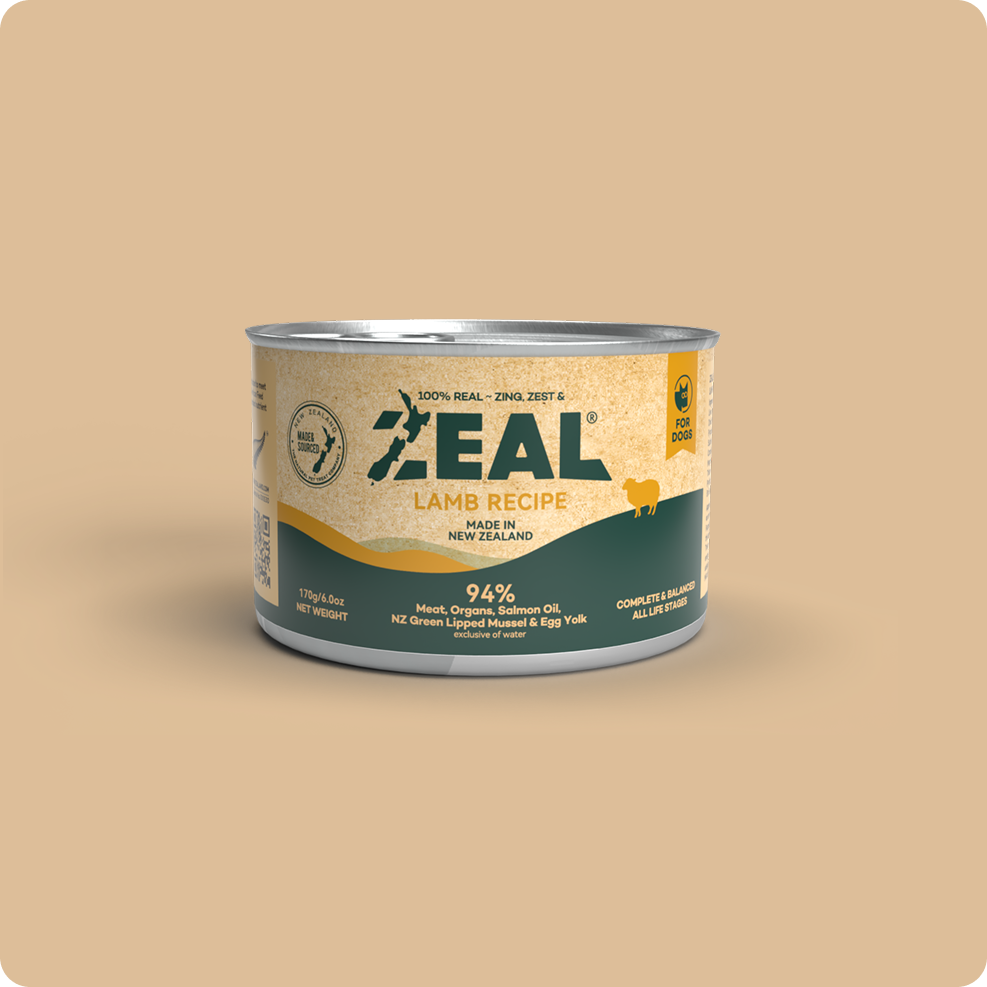
ZEAL dog wet food is made with 94% real meat and organs, green-lipped mussels, egg yolk and salmon oil. The recipes are grain-free and have no added sugars, with slow-cooking used for moisture retention. ZEAL dog wet food is available in Beef, Lamb, Venison, Chicken, and Chicken & Salmon recipes, depending on the current listing.
The available dog wet food formats include 170g �� 12 and 390g �� 12. Nutritional composition varies by recipe, so the specific recipe should be reviewed when comparing protein, fat, carbohydrate, and calorie levels.
ZEAL Dog Air-Dried Food
ZEAL dog air-dried food contains 96% real meat & organs and is gently air-dried in Canada. The recipes are also free from synthetic vitamins, grains, gluten, corn, wheat, soy, legumes, and lentils, with organic vegetables and selected superfoods included in the formulations.
Dog air-dried recipes include Beef, Chicken, Turkey, and Salmon & Duck. The available sizes range from 5 oz through larger 5.5 lb formats depending on the recipe.
The nutritional profile differs between recipes. For example, on a dry matter basis, ZEAL dog air-dried Beef contains 51.79% protein and 27.22% fat, while Salmon & Duck contains 37.75% protein and 44.97% fat. These differences are one reason the specific recipe should be considered rather than judging a food category by its name alone.
Wet Food vs. Air-Dried Food for an Adult Belgian Malinois
There is no need to treat wet food and air-dried food as competing categories. They offer different feeding formats and can be evaluated according to the dog's routine, food preferences, calorie needs, and the owner's feeding priorities.
| Consideration | ZEAL Wet Food | ZEAL Air-Dried Food |
|---|---|---|
| Production | Made in New Zealand | Gently air-dried in Canada |
| Recipe meat content | 94% real meat and organs, green-lipped mussels, egg yolk and salmon oil | 96% real meat & organs |
| Format | Moist food | Shelf-stable air-dried food |
| Dog recipes | Beef, Lamb, Venison, Chicken, Chicken & Salmon | Beef, Chicken, Turkey, Salmon & Duck |
A suitable choice for an individual Belgian Malinois depends on the dog's complete feeding routine, including activity, body condition, food tolerance, and total calorie intake.
How to Introduce a New Dog Food
A sudden change in food can cause digestive upset in some dogs. When there is no medical reason requiring an immediate change, a gradual transition is generally a more practical approach.
Start by introducing a small proportion of the new food alongside the current food and increase the new food progressively while reducing the old food. Monitor appetite, stool quality, and overall tolerance during the transition.
For a dog with recurring digestive problems, work with a veterinarian before repeatedly changing diets. If vomiting, diarrhea, refusal to eat, or other concerning signs continue, professional assessment is more appropriate than continuing to experiment with different foods.
What About Dog Food for Small Dogs With Allergies?
Searches for "dog food for small dogs with allergies" often combine two separate considerations: body size and food tolerance. The principles are similar. A small dog still needs a nutritionally complete diet, while any suspected food reaction needs to be considered individually.
For an adult Belgian Malinois, however, size-specific small-dog advice is not the main consideration. Belgian Malinois are medium-to-large athletic dogs, so calorie intake, activity level, portion size, and the nutritional profile of the specific food are more relevant to daily feeding decisions.
Questions to Ask Before Choosing a Dog Food
Before changing your adult Belgian Malinois' food, consider these questions:
- Is the food complete and balanced for the dog's life stage?
- What are the primary animal protein sources?
- What is the calorie density?
- How much protein, fat, and carbohydrate does the specific recipe provide?
- Does the ingredient list fit the dog's known feeding history?
- Are treats and toppers adding additional ingredients?
- Is grain-free actually relevant to the dog's individual needs, or is it simply a shopping preference?
- Is there a persistent digestive or skin concern that should be evaluated by a veterinarian?
A Practical Approach to Everyday Feeding
Choosing food for an adult Belgian Malinois does not have to come down to a single marketing claim. Start with complete and balanced nutrition, then look at the actual recipe, calorie density, ingredient list, and your dog's activity level.
If your search began with "dog food for allergies and sensitive stomach," remember that the right process is more useful than a universal ranking. A food that works well for one dog may not be appropriate for another, particularly when a specific ingredient is suspected of causing a reaction.
For everyday nutrition, ZEAL provides both New Zealand-made wet food and Canadian air-dried food, with distinct recipes and nutritional profiles. Review the individual recipe and your dog's feeding needs rather than selecting a product solely because it is labeled grain-free, low allergy, or associated with a particular protein.
For an adult Belgian Malinois, thoughtful feeding means matching the food to the individual dog while keeping the overall diet complete, consistent, and appropriate for daily activity.