Quick Answer
An Alaskan Malamute puppy needs a complete and balanced growth diet with appropriate calories, protein, fat, calcium, phosphorus, and other essential nutrients. Because Malamutes are a large breed, controlled growth and maintaining a lean body condition are especially important. At 2 months, puppies generally need several measured meals throughout the day, while a 6-month-old puppy still needs a growth-appropriate diet rather. Grain is not inherently required or harmful; the priority is nutritional completeness and balance. If a puppy has suspected food allergies, do not use a retail food change as a substitute for veterinary evaluation or a properly supervised elimination diet.
What Should an Alaskan Malamute Puppy Eat?
Alaskan Malamutes are large, powerful dogs, and their puppy years involve substantial physical growth. That makes the quality and quantity of food important��not because a puppy needs to grow as quickly as possible, but because growth should be steady and nutritionally balanced.
When considering the diet for puppies, start with nutritional adequacy rather than individual ingredients or marketing claims. A puppy's diet needs appropriate protein, fat, minerals, vitamins, and energy for growth. Large-breed puppies also require particular attention to calcium, phosphorus, and calorie intake because excessive growth and overfeeding can place additional stress on developing bones and joints.
For an Alaskan Malamute puppy, a practical feeding routine should therefore focus on three things: a complete and balanced food appropriate for growth, measured portions, and regular monitoring of body condition as the puppy matures.
Why Large-Breed Puppy Nutrition Needs Extra Attention
Large-breed puppies do not simply need more food because they will eventually become large dogs. Their nutrient requirements need to be met without providing excessive calories or excessive amounts of certain minerals.
Calcium and phosphorus are particularly important during skeletal development. Both too little and too much can be problematic, which is why large-breed puppy diets need carefully controlled nutrient levels. Veterinary nutrition guidance also emphasizes avoiding excessive calorie intake and overly rapid growth in large and giant breed puppies.
Protein remains important because puppies are building lean tissue as they grow, while fat provides concentrated energy and essential fatty acids. Omega-3 fatty acids, including EPA and DHA, are also relevant to normal puppy development.
This is why choosing food based only on a high meat percentage, a single ingredient, or an attractive ingredient list can miss the bigger question: does the complete diet provide appropriate nutrition for growth?
What to Feed a 2-Month-Old Alaskan Malamute Puppy
If you are looking for dog food for 2 months old puppy, the first consideration is whether the food is nutritionally complete and balanced for growth. Around eight weeks, puppies are generally being weaned from their mother's milk and beginning to rely fully on solid food.
At this age, an Alaskan Malamute puppy is still at an early stage of rapid development. Instead of allowing free access to food, measured meals can make it easier to monitor intake and body condition. The exact daily amount depends on the puppy, the food's calorie density, activity level, current weight, and growth pattern.
Rather than choosing a feeding amount solely from a generic chart, monitor your puppy's weight and body condition regularly. Large-breed puppies can remain healthy while growing steadily without being encouraged to gain weight as quickly as possible.
A Simple Feeding Routine at 2 Months
- Use a complete and balanced puppy diet appropriate for growth.
- Measure the daily food amount instead of feeding freely.
- Divide the daily amount into regular meals.
- Monitor body condition and weight consistently.
- Introduce dietary changes gradually rather than switching foods abruptly.
- Ask your veterinarian about the appropriate feeding amount if growth or body condition changes unexpectedly.
What Should a 6-Month-Old Alaskan Malamute Eat?
By six months, an Alaskan Malamute puppy is still growing and should not automatically be switched to adult maintenance food simply because the puppy is larger or eating more confidently.
Large and giant breed dogs can continue growing well beyond their first birthday. Veterinary nutrition guidance notes that large-breed puppies may require a growth-appropriate diet for considerably longer than small and medium breeds.
If you are researching the food for 6 month old puppy, look beyond the word "puppy" on the front of the package. Review the nutritional adequacy statement, calorie density, feeding instructions, and whether the food is appropriate for the puppy's growth stage.
At six months, portion control becomes particularly useful. As a puppy grows older, energy requirements per pound can change, even though the dog is becoming larger overall. The goal is steady development while maintaining an appropriate body condition rather than maximizing growth speed.
Does an Alaskan Malamute Puppy Need Grain in Its Diet?
Many puppy owners search for a quality puppy food with grain, while others specifically look for grain-free recipes. Grain itself should not be the only factor used to judge whether a puppy food is nutritionally appropriate.
The more useful question is whether the complete diet provides the nutrients the puppy needs in appropriate amounts and proportions. Veterinary nutrition guidance recommends looking at the nutritional adequacy statement and the overall formulation rather than judging a diet by one ingredient category alone.
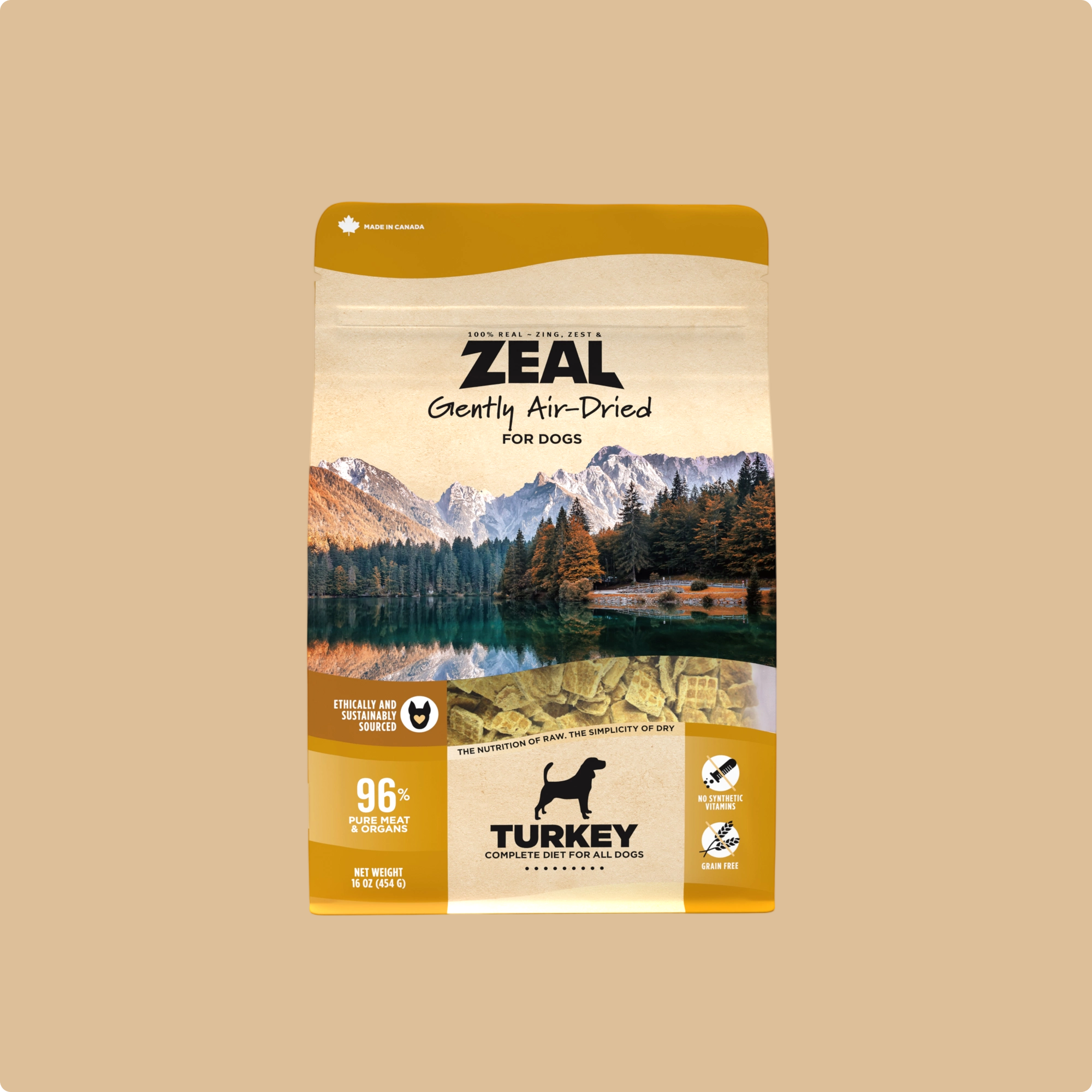
ZEAL's current air-dried dog food recipes are grain-free and contain 96% real meat & organs, with organic vegetables and other functional ingredients. The recipes are gently air-dried in Canada and are made without grains, gluten, corn, wheat, soy, legumes, or lentils.
That does not mean grain-free food is automatically necessary for every Alaskan Malamute puppy. It simply means grain-free is one characteristic of ZEAL's air-dried recipes. The more important consideration is whether the particular food is appropriate as a complete diet for the individual puppy and its life stage.
What About Mild Food Allergies in an Alaskan Malamute Puppy?
If an Alaskan Malamute puppy has suspected food allergies, food selection requires more care than simply searching for a food labeled "hypoallergenic" or switching between retail recipes.
Food-related reactions can have different causes, and a suspected food allergy should be evaluated with a veterinarian. Veterinary guidance may involve a structured food trial using an appropriate diet and controlled challenge rather than repeatedly changing foods based on ingredient lists alone.
For this reason, ZEAL should not be presented as a treatment for allergies or as a substitute for a veterinary diet. If a puppy has persistent or recurring signs that concern you, veterinary guidance should come before making the diet the primary intervention.
How to Think About Ingredients When Allergies Are a Concern
Ingredient awareness can still be useful when discussing your puppy's diet with a veterinarian. Keep a consistent record of the foods, treats, supplements, and other edible products your puppy receives. This can make it easier to identify what has changed when discussing a suspected food reaction.
Avoid repeatedly changing several variables at once. If multiple foods, treats, and supplements are introduced together, it becomes difficult to determine which change may be associated with a reaction.
How ZEAL Fits Into a Puppy Feeding Routine
ZEAL offers wet food made in New Zealand and air-dried food made in Canada. The two categories have different formulation and production claims, so they should be considered separately rather than treated as interchangeable versions of the same product.
ZEAL wet food uses the brand's standardized formulation description of 94% real meat and organs, green-lipped mussels, egg yolk and salmon oil, and is described as AAFCO Complete & Balanced, grain-free, and made without added sugars.
ZEAL air-dried dog food contains 96% real meat & organs and is gently air-dried in Canada. The dog recipes include ingredients such as pumpkin, bamboo fiber, green-lipped mussel, turmeric, ginger, yucca schidigera, kelp, and organic vegetables, depending on the recipe.
For puppies, however, the central question should remain nutritional adequacy and feeding amount. ZEAL recipes are built around complete and balanced nutrition rather than breed-specific claims. For an Alaskan Malamute puppy, the more useful question is whether a recipe's nutritional profile and feeding format fit the individual dog's growth needs.
How Much Food Does an Alaskan Malamute Puppy Need?
There is no single daily amount that works for every Alaskan Malamute puppy. Feeding needs depend on age, current weight, activity, growth rate, body condition, and the calorie density of the selected food.
Large-breed puppy nutrition guidance recommends monitoring growth and body condition rather than relying exclusively on a feeding chart. Measuring food with a kitchen scale can also be more precise than estimating portions by volume.
A useful routine is to record your puppy's weight regularly and adjust portions when needed. Your veterinarian can also help assess the puppy's growth curve and body condition, particularly during the faster-growing months.
What Should You Look for on a Puppy Food Label?
When comparing puppy foods, use a checklist based on nutritional adequacy rather than marketing language.
- Life-stage suitability: Look for a nutritional adequacy statement showing that the food provides complete and balanced nutrition for growth or is appropriate for all life stages.
- Large-breed considerations: For a large-breed puppy, check whether the nutritional statement specifically addresses growth of large-size dogs when applicable.
- Calorie density: Energy intake matters because excessive calories can contribute to overly rapid growth.
- Mineral balance: Calcium and phosphorus need to be provided in appropriate amounts and proportions.
- Protein and fat: Growing puppies need sufficient protein, essential amino acids, fat, and essential fatty acids.
- Feeding instructions: Use the manufacturer's feeding guidance as a starting point, then adjust with professional guidance and body-condition monitoring.
AAFCO terminology also matters. AAFCO establishes nutrient profiles and feeding-trial procedures, but it does not approve or certify individual products. The appropriate statement appears on the pet food label. AAFCO itself does not approve or certify individual foods, so the appropriate nutritional adequacy statement is what appears on the label.
Common Feeding Mistakes With Large-Breed Puppies
Trying to Make the Puppy Grow Faster
A larger puppy is not necessarily a healthier puppy. Large-breed puppies need controlled growth, and excessive energy intake can contribute to problems during skeletal development.
Adding Calcium or Vitamin Supplements Without Guidance
More minerals are not automatically necessary. Puppy diets should already provide the nutrients required for growth, and unnecessary supplementation can disturb nutritional balance. Veterinary sources recommend discussing vitamin or mineral supplementation with a veterinarian before adding it to a complete puppy diet.
Choosing Food Only Because of a High Meat Percentage
Meat content can be an important part of a food's ingredient profile, but a growing puppy needs more than protein. Energy, essential fatty acids, minerals, vitamins, and overall nutritional balance all matter.
Changing Food Repeatedly Because of a Suspected Allergy
Frequent, uncontrolled food changes can make it harder to understand what is happening. When food allergy is suspected, work with a veterinarian rather than treating every dietary change as an informal allergy test.
A Practical Feeding Approach for an Alaskan Malamute Puppy
For most owners, a simple routine is easier to maintain than constantly searching for a new food. Choose a complete and balanced growth diet, measure portions, keep treats and extras controlled, monitor body condition, and adjust feeding as the puppy grows.
For a puppy around two months old, prioritize a consistent transition to solid food and regular measured meals. For a six-month-old puppy, continue to evaluate growth, body condition, calorie intake, and nutritional adequacy rather than assuming the puppy is ready for adult food.
If allergies are part of the picture, separate that question from the general question of puppy nutrition. A nutritious everyday diet and a veterinary-managed allergy diet are not necessarily the same thing.
Final Takeaway
The right puppy diet for an Alaskan Malamute is not defined by one ingredient, one grain-free claim, or one meat percentage. It starts with complete and balanced nutrition for growth, appropriate energy intake, controlled growth, and careful monitoring of body condition.
For young puppies, including two- and six-month-old Malamutes, feeding should evolve with the puppy rather than follow a fixed portion forever. And when suspected food allergies are involved, professional evaluation is more useful than repeatedly switching foods on your own.
ZEAL provides New Zealand-made wet food and Canadian-made air-dried food with clearly defined ingredient and production profiles. The brand's role is to provide thoughtfully made everyday nutrition��not to replace veterinary diagnosis or specialized medical diets.